Category: AI Tools

  • **Product education (using demofable)**

    **Product education (using demofable)**

    Why Product Teams Are Ditching Separate Tools for AI Video Editors

    Product managers and technical writers spend hours juggling multiple tools: a screen recorder, a video editor, a documentation platform, and a design tool just to create one product demo

    The result is fragmented workflows, duplicate effort, and demos that feel disjointed because the video and the written guide don’t actually align

    This article explores how modern AI video editors are consolidating this workflow and why that shift matters for cross-functional teams in 2026

    The AI handles the tedious editing work

    The automation removes the manual labor that consumes most of a video editor’s time. The system removes silence and dead air, zooms into relevant screen regions automatically, writes descriptive captions from the narrator’s voice, timestamps each action, and extracts high-resolution screenshots for inclusion in the documentation. Teams choose output formats on demand, widescreen for your website, vertical for social media, square for LinkedIn, all derived from a single recording without re-shooting or re-editing.

    Technical writers benefit equally. Instead of watching hours of video or writing from memory, this solution surfaces a complete step-by-step breakdown with accompanying images already prepared. The writer’s role shifts from transcription and guesswork to refinement: fact-checking terminology, clarifying ambiguous steps, and adding domain-specific context that the AI cannot infer. Documentation that once took days to write from scratch now requires hours of focused review and polish.

    The Control You Keep: Why This Isn’t a Black Box

    Review before publish

    AI-generated output never ships without human eyes on it. Demofable surfaces every editorial decision before export, you see exactly which segments were cut for pacing, where the system applied zoom to highlight UI elements, and what narration it generated. This review step is mandatory, not optional. You control the final output at a granular level: regenerate specific sections without re-recording, edit captions word-by-word, adjust playback speed, or swap the AI voice for your own recording. A product manager can tighten a demo’s pacing in seconds. A technical writer can refine narration tone. An engineer can flag a misidentified button and have the system regenerate just that moment. No re-recording. No starting over.
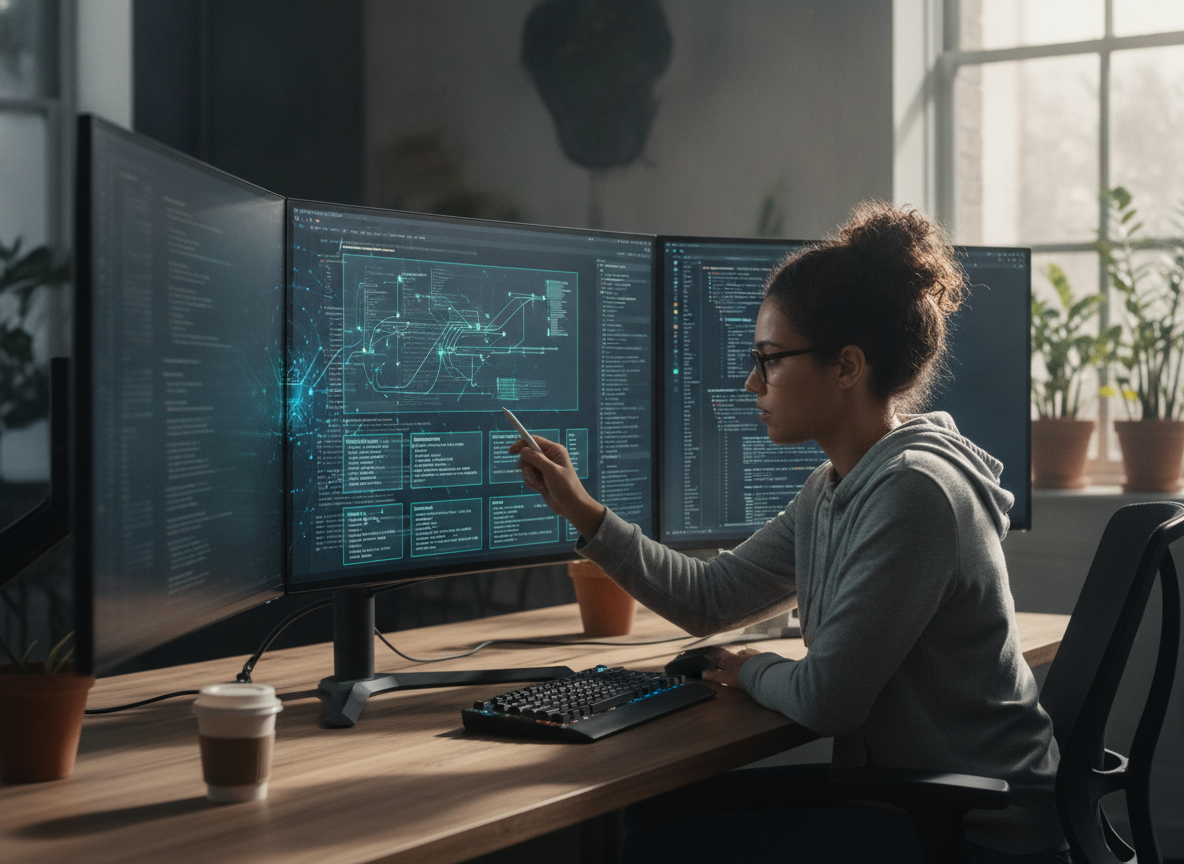
    transparent technology dashboard

    Photo by Quixess Social

    Privacy and sensitive data flagging

    The solution automatically detects and flags sensitive information captured on screen, customer names, email addresses, account IDs, API keys, before rendering. You decide whether to blur, redact, or replace each flagged element. This layer of human-in-the-loop redaction catches what pixel-level detection alone might miss. Brand consistency applies automatically across all outputs: logos, color schemes, intro and outro clips, and voice style enforce your identity without manual intervention on every video. Your team maintains creative authority while the platform handles repetitive standardization work.

    Conclusion

    Consolidating video editing, documentation, and demo creation into a single AI-powered workflow eliminates handoffs and keeps your team aligned. What used to take days, record, edit, write, design, publish, now happens in one pass, with you maintaining full control at every checkpoint. If your team is still juggling a screen recorder, video editor, and documentation tool separately, you’re solving the same problem three times. Consider how a unified approach could reclaim time for strategy instead of tooling.

  • Here are 50, grouped by what they’re for so you can build a content calendar out of them rather than a random list. All grounded in what demofable actually does today, no aspiratio

    Here are 50, grouped by what they’re for so you can build a content calendar out of them rather than a random list. All grounded in what demofable actually does today, no aspiratio

    Why Teams Are Switching to AI Video Editors for Product Demos

    Creating product demos typically requires juggling multiple tools: a screen recorder, a video editor, a technical writer, and hours of manual work. In 2026, teams are under pressure to document and demo products faster without adding headcount. Modern AI video editors streamline the entire demo creation process, from raw recording to polished output, in a fraction of the traditional time.

    The Problem With Traditional Demo Creation

    Why Screen Recorders and Video Editors Don’t Work Alone

    Most teams rely on a fragmented workflow: record with a screen recorder, import into a video editor, trim footage, add captions manually, then write separate documentation. Each tool creates friction. A product manager records a 12-minute walkthrough; an engineer spends hours trimming dead air; a technical writer creates step-by-step documentation from scratch, often mismatched with what appears on screen. By the time the demo reaches customers, three tools and multiple people have touched it, and inconsistencies are inevitable.

    The Hidden Cost of Manual Editing and Documentation

    Video editing consumes far more time than anticipated. Removing pauses, adjusting zoom to highlight UI elements, and adding captions manually can turn a 10-minute recording into a 4-hour project. Documentation duplication amplifies this: teams write guides separately from videos, so product updates require refreshing both assets independently. As product complexity grows, scaling demos becomes impractical.

    How an AI Video Editor Transforms Raw Recordings

    Automatic Editing That Removes the Tedious Work

    Modern AI video editors use artificial intelligence to eliminate manual editing. The platform removes dead air, pauses, and fumbles automatically. Smart zoom and pan focus viewers on buttons, fields, and text that would otherwise blur on smaller screens. Captions and on-screen callouts are generated with minimal input. What once took hours now happens in seconds, applying cinematic-quality adjustments that make unscripted recordings feel polished.

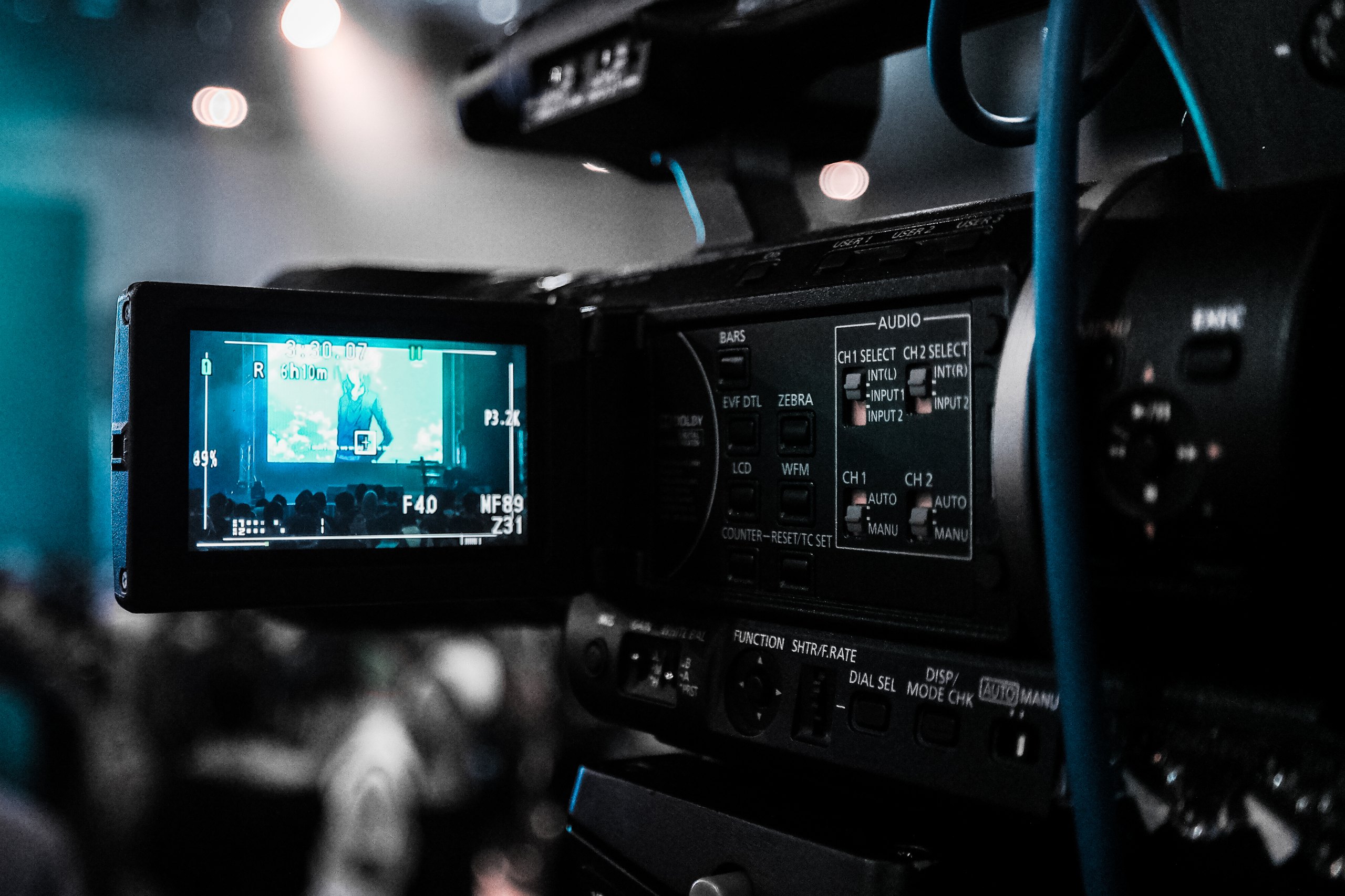
    professional video camera screen

    Built-In Documentation Generation From Video Content

    The same recording generates both a polished video and step-by-step written guide with real screenshots, eliminating duplication. The platform extracts keyframes from your video, matches them to specific steps, and structures them as a navigable guide. Documentation always reflects what viewers see. When product interfaces change, a new recording feeds both assets simultaneously.

    Adaptive Formatting for Different Platforms and Audiences

    A single recording adapts to multiple formats: full-length demo for onboarding, 30-second clip for social media, square format for LinkedIn, vertical orientation for mobile apps, and static guide for searchable help centers. Customer success teams use the full video in training, marketing repurposes clips without re-editing, and support teams embed the guide directly in knowledge bases.

    Real-World Applications for Product Teams

    Sales and Onboarding Use Cases

    Sales teams can record a screen capture showcasing features relevant to a prospect’s use case and have a polished, branded demo ready within hours. This speed directly impacts conversion rates.

    business team working at table

    Customer success teams use recorded walkthroughs combined with automated editing and written guides to onboard dozens of users simultaneously without draining their calendar. Users follow step-by-step video and written instructions at their own pace, reducing support tickets and accelerating time-to-value.

    Customer Support and Knowledge Base Building

    Support teams spend significant time answering repetitive questions. A support engineer can record a quick screen walkthrough, and the platform automatically generates a searchable knowledge base entry with both video and written steps. Customers find answers faster, support volume drops, and the organization builds a growing library of reusable content without additional overhead.

    Choosing the Right Product Demo Builder for Your Team

    Key Features to Prioritize

    The most effective product demo builders handle video editing and written guide generation in a single workflow, eliminating handoffs and version mismatches. Prioritize tools that support your distribution needs: social media formats, embeddable players, self-hosted documentation sites. Ensure privacy and security features are built in. The ability to review and edit AI decisions before publishing is essential; automation should accelerate work, not create liability.

    software selection evaluation

    Photo by Quixess Social

    Evaluating AI Accuracy and Integration

    Integration capabilities determine whether the tool becomes central to your workflow or another siloed platform. Check CMS connections, chat tool support, and compatibility with existing support platforms. Test whether the solution handles hundreds of recordings without performance degradation. Teams using automated editing and documentation generation report 60% faster content production cycles compared to manual workflows.

    Conclusion

    An AI video editor eliminates the friction of creating product demos and documentation separately, letting teams ship content in hours instead of weeks. The right tool removes tedious manual work while maintaining brand consistency, privacy controls, and team approval. If your team is still juggling multiple tools or spending days on each demo, an AI-powered solution can reclaim that time for strategy and growth.

  • Building a Renderer That Never Has to Guess

    Building a Renderer That Never Has to Guess

    Building a Renderer That Never Has to Guess: Why Privacy Detection Matters in Your AI Video Editor

    Most screen recording tools treat privacy as a post-production afterthought, scanning finished video frames for sensitive data like credit card numbers, API keys, or customer names, then applying redaction after rendering. This reactive approach creates friction: missed redactions slip through, structural changes demand expensive re-encodes, and demo teams face bottlenecks waiting for fixes. A renderer that detects what matters *before* committing pixels eliminates this guessing game.

    The Guessing Problem: Why Pixel-Based Detection Falls Short

    How most screen recorders handle sensitive data

    Traditional tools capture video, render it, then scan finished frames for sensitive information using pixel-based detection. The problem is that pixels lack context. A 16-digit number could be a customer account ID requiring redaction, a test credit card from documentation, or a serial number in a help article. The detector can’t distinguish, leading to over-redaction or missed threats.

    The cost of catching problems too late

    By the time a pixel-based scanner flags sensitive data, the renderer has already committed to video structure, frame rates, compression, and timing. If redaction changes are needed, the entire segment must be re-encoded. For demo teams publishing dozens of walkthroughs weekly, this creates compounding delays. A missed redaction discovered after publishing is far worse: it means pulling the video, re-rendering, and rebuilding customer trust.

    Knowing What Matters: Structural Detection Before Rendering

    Understanding the page structure, not just the pixels

    An AI video editor that understands the structure of what you recorded, the DOM elements, form field labels, data hierarchies, can identify sensitive information before rendering begins. Structural analysis looks at semantic meaning: a field labeled “Customer Email” contains data needing redaction; a phone number cited in a help article doesn’t.

    code architecture diagram

    Photo by Quixess Social

    Structural detection distinguishes between user-entered data and UI chrome, between PII fields and reference numbers. This context flows directly into the renderer’s planning phase, so blurring, zooming, and timing decisions all account for what’s private before a single frame is encoded.

    What gets flagged, what doesn’t, and why it matters

    Structural analysis prioritizes context over pattern matching. When recording a customer onboarding flow, the system sees form labels, input types, and data validation rules. It knows the email field in a signup form is sensitive, but the “Enter email” placeholder text is not. A credit card input field triggers immediate flagging; a “Card Number” label in a static diagram doesn’t.

    The Human Gate: Why AI Can’t Own Privacy Alone

    Automatic detection is a starting point, not an endpoint

    Structural analysis provides powerful privacy detection, but remains incomplete without human judgment. An algorithm can identify that a customer name appears in a chat window or that an account number was spoken during narration, yet cannot determine whether that exposure matters for this audience or serves a legitimate purpose.

    locked yellow file folder

    A product manager reviewing a demo knows whether revealing a specific company name violates an NDA. A compliance officer understands which data elements trigger audit requirements. The AI proposes redactions based on patterns; the human approves based on judgment.

    Building review workflows that catch what algorithms miss

    Best-in-class demo tools surface the AI’s redaction plan before rendering begins, letting reviewers inspect every proposed edit in seconds. This collaborative moment catches mistakes that would otherwise propagate into published videos. Privacy becomes a shared responsibility: the AI identifies risk, the human confirms intent, and the renderer executes with certainty.

    Faster Renders, Fewer Re-Dos: The Speed Advantage of Building Right

    Why early detection prevents costly re-renders

    When privacy detection and human review occur before rendering starts, the encoder has complete information about what to protect. It renders once, gets it right, and moves forward. Teams that defer privacy review until post-production face expensive re-encoding cycles when privacy issues surface.

    computer processing speed efficiency

    Photo by Quixess Social

    From one recording to multiple safe outputs

    A single reviewed redaction plan scales across multiple output formats. Generate widescreen, vertical, and square aspect ratios from the same approved edit without re-running privacy detection. Teams shipping 10+ demo videos monthly can reclaim hours per week. Multi-aspect-ratio rendering from a single verified edit plan means teams capture momentum instead of watching opportunities close while videos re-encode.

    Conclusion

    A renderer that never has to guess is engineered from the ground up with full visibility into what’s sensitive and shareable. Structural detection identifies risk patterns, human review validates intent, and the encoder executes with certainty, eliminating guesswork and costly re-renders. Privacy, speed, and accuracy aren’t competing priorities, they’re the same outcome when detection and review happen before rendering. Audit your current demo workflow: How many videos get re-encoded because privacy issues surface too late? Building the renderer right the first time recovers both time and trust.

  • Why Every EDL Version Is Append-Only (and What That Buys Us)

    Why Every EDL Version Is Append-Only (and What That Buys Us)

    Why Every EDL Version Is Append-Only (and What That Buys Us)

    Most demo video tools treat edits as destructive, once you change something, the original is gone. Append-only architecture changes that equation entirely. Every decision is tracked and reversible, which matters more for product demos than most builders realize. Whether you’re redacting sensitive information, adjusting zoom levels, or exporting multiple aspect ratios, destructive edits create bottlenecks that compound quickly. This post explores the problem with destructive edits, how append-only systems solve it, and why this architectural choice is essential for scalable product walkthroughs.

    The Problem With Destructive Edits in Screen Recording Tools

    Why one-way changes create bottlenecks

    When a screen recorder applies an edit and discards the original decision, reversing it means starting over. Imagine you’ve rendered a 90-second demo with three privacy redactions, blurred text boxes, obscured customer names, and masked payment information. Your product manager asks for one adjustment: the first redaction was too aggressive. In a destructive system, you don’t adjust that redaction; you re-apply the entire blur plan and render again. This pattern repeats across every edit type, zoom adjustments, narration timing, aspect ratio conversions. Teams iterating with stakeholders or managing privacy-sensitive content face lengthy render cycles for what should be simple parameter changes.

    How Append-Only Architecture Works for Demo Video Creation

    Every edit decision is a new layer, not a replacement

    An append-only EDL (Edit Decision List) logs each choice, where to zoom, what to redact, which narration version to use, as a separate entry that can be modified or removed without touching earlier entries. Think of it like a transparent sheet placed over the original recording. If you change your mind about a zoom region or realize a redaction boundary was off by pixels, you don’t erase the original; you adjust that specific decision layer. The source data, your raw screen recording, remains untouched beneath all decisions.

    video editing timeline

    Photo by Quixess Social

    Demofable implements this pattern by storing every edit as an immutable log entry. If you create a zoom keyframe at 15 seconds, then decide the zoom should be tighter, the system logs an update, preserving the full history of what changed and when. This design is borrowed from databases and version control systems, where immutability prevents data loss and makes auditing simple.

    What Append-Only Gets You: Three Concrete Wins

    Instant reversal without re-recording

    Traditional video editing punishes second-guessing. You approve an edit plan, render a 15-minute demo, and during review realize a redaction was too aggressive or a key UI element got flagged that should have stayed visible. In destructive systems, you manually undo, adjust, and re-render. Append-only architecture flips this burden. Every edit decision is stored as an immutable record. When you spot an issue, you append a correction, and the platform re-renders only the affected segment. A five-second fix takes seconds, not hours. For teams producing dozens of demos weekly, this efficiency compounds quickly.

    data center server aisle

    Safer privacy handling with full audit trails

    Compliance teams need to know what exactly got flagged and removed from that video. In traditional editors, the answer lives in scattered notes. Append-only systems make every redaction decision explicit and logged with timestamps. When a support engineer redacts a customer email, the system records what was flagged, why it matched a redaction rule, and when. This transparency reduces liability, speeds compliance reviews, and gives regulated teams, financial services, healthcare, confidence that redaction decisions are defensible and traceable.

    Efficient multi-format rendering from one source

    A single raw recording becomes 16:9 landscape for your website, 9:16 vertical for social media, and 1:1 square for LinkedIn. Traditional approaches require three separate edit passes or manual adjustments per format. Append-only systems derive all formats from one immutable source EDL. Update the zoom level once, and all three outputs reflect the change without conflicting edits. When your demo library scales, batch updates become safe, propagatable changes rather than risky manual interventions.

    Why This Matters for Teams Building Product Walkthroughs

    Sales and support teams need dozens of demo videos production-ready quickly. Append-only architecture means batch updates don’t require individual re-editing passes. When a product screenshot changes, you apply a correction once and it cascades safely across all renders. For regulated industries handling protected customer data, the audit trail built into append-only systems, every redaction logged, timestamped, and reasoned, shifts accountability from “hope the tool got it right” to “trust that every decision is logged and reversible.” Teams move from manual verification to systematic verification.

    product team collaboration

    Photo by Quixess Social

    Conclusion

    Append-only architecture is the foundation of fast, safe, reversible demo video production. By logging every edit as an immutable entry rather than overwriting decisions, teams gain instant correction without re-recording, full compliance auditability, and efficient multi-format rendering from a single source. When evaluating demo builders, ask: are edits truly reversible, and does the tool maintain a complete audit trail? The best documentation tools and alternatives to traditional workflows don’t just automate editing, they make it safe to change your mind at every step, turning demo production into a confident, scalable operation.

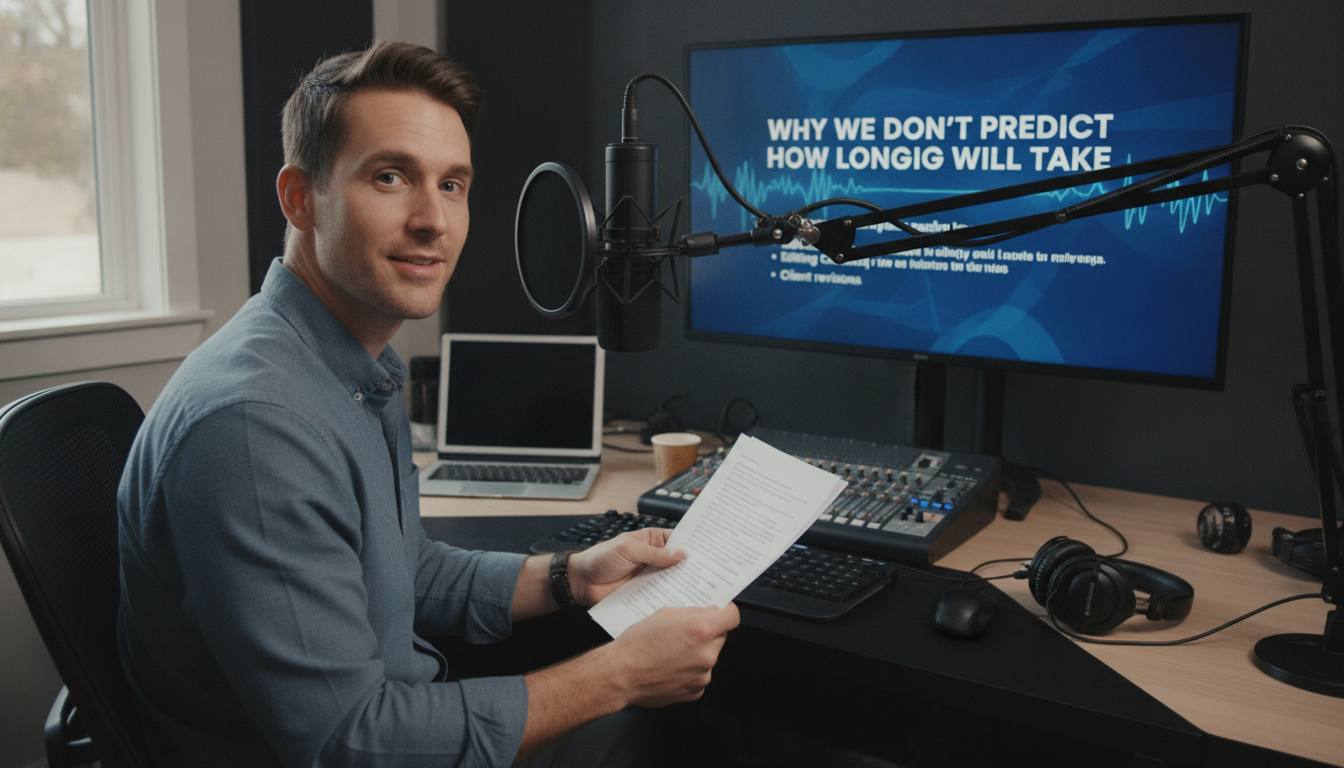
  • Why We Don’t Predict How Long Narration Will Take

    Why We Don’t Predict How Long Narration Will Take

    Why We Don’t Predict How Long Narration Will Take

    Product teams often try to predict demo narration length before recording starts. It seems rational, plan your content calendar, schedule reviews, set audience expectations. But this approach fails the moment your narrator hits record. Unscripted walkthroughs contain natural pauses, corrections, and moments of discovery that no pre-recording estimate can capture. This article explores why narration duration remains fundamentally unpredictable and how accepting this reality streamlines your entire demo creation workflow.

    The Estimation Problem Nobody Talks About

    Why product teams estimate narration length upfront

    Marketing teams want to know if a walkthrough fits a 60-second social media slot or requires a 5-minute format. Sales organizations need to schedule prospect demos within time-boxed calls. Estimating upfront feels like planning and taking control of an uncertain process. Scripts get word counts, speaking pace assumptions get applied, and a rough duration emerges as a commitment. Yet this estimate collapses under the weight of reality.

    The hidden variables that destroy predictions

    Real walkthroughs contain pauses, corrections, and thinking moments that never appear in written scripts. A narrator might hesitate before clicking a button, backtrack to clarify a point, or pause to let a concept sink in. One speaker might explain a feature in 90 seconds; another might take three minutes covering the exact same ground with natural breathing room. Product complexity adds another layer, explaining a feature to an internal engineering team differs fundamentally from walking a prospect through the same functionality. Actual narration time becomes a function of speaker pace, product familiarity, and audience background, variables that only become clear during recording.

    What Makes Unscripted Screen Recordings Unpredictable

    Natural speech patterns create timing chaos

    Humans don’t speak like scripts read. Speakers naturally hesitate when formulating explanations, repeat themselves for emphasis, and backtrack when repositioning points. These verbal behaviors are features of effective communication, but they’re invisible to pre-recording estimation models.

    screen recording software

    Photo by Quixess Social

    Consider a product walkthrough explaining a dashboard feature. A script might read: “Click the settings icon and select analytics.” The actual narration might unfold as: “So here, um, if you click this settings icon, or actually, let me show you the easier way, you see this dropdown menu? Click it, and then you’ll see analytics, which is probably what you want.” That’s natural explanation, 40% longer than the script suggested, and that variance cascades across your entire demo.

    Product interaction speed varies by scenario

    Clicking speed, scrolling duration, and page load times add unmeasurable delays. A demonstration filmed on a fast development environment might take 30% longer in front of a customer with a slower network. Different audiences also require different pacing, a sales prospect demo needs more context than an internal training video, while a support walkthrough for power users covers ground faster than one targeting new customers. The same feature explanation spans 2-5 minutes depending on context, making a single predicted duration meaningless.

    The AI Video Editor Approach: Measure After, Not Before

    Recording first removes the guessing game

    When you record without a locked script, you’re capturing authentic user behavior: natural pauses, clarifications, and real-time thinking. This raw footage contains the truth about how long your explanation actually takes to deliver, unlike estimates based on assumptions.

    professional video camera screen

    Let editing tools work with actual data

    Once your screen recording is complete, AI-powered editors can transcribe narration in real time and analyze the timeline with precision. These tools intelligently trim dead air, remove false starts, and clean up verbal stumbles without altering meaning or flow. An AI video editor works backward from recorded reality rather than forward from guesses, making your final demo length a measurement based on actual delivery.

    Why This Matters for Your Demo Workflow

    Planning timelines without predictions

    When you know the exact length only after editing is complete, project bottlenecks disappear upstream. Teams stop asking “How long will this narration take?” and start asking “What version do we need?” A five-minute walkthrough can be cut to two minutes for social media, expanded to eight minutes for documentation, or segmented into thirty-second clips for onboarding.

    product demo workflow

    Photo by Quixess Social

    Building flexibility into your process

    Tools that function as documentation generators and product demo builders enable you to produce multiple formats without re-recording. Your screen recording is captured once, then intelligently shaped into different assets, each with known timing and scope. This flexibility frees teams to focus on format and audience rather than duration uncertainty.

    Conclusion

    Stop trying to predict narration length; let the recording reveal it. The most efficient demo workflows measure after capture, not before, removing estimation errors entirely. When your screen recording becomes your source of truth and your editing process is data-driven, every version of your demo arrives with precision and confidence. Start recording first. Measure second. Build your timelines based on what actually happened.

  • Converting Unscripted Screen Recordings to Step-by-Step Guides: An Engineer’s Workflow

    Converting Unscripted Screen Recordings to Step-by-Step Guides: An Engineer’s Workflow

    Converting Unscripted Screen Recordings to Step-by-Step Guides: An Engineer’s Workflow

    Raw screen recordings capture authentic product workflows, but they rarely translate directly into polished documentation. Engineers stumble over explanations, sensitive data flashes across the screen, and technical writers spend days manually transcribing content into step-by-step guides. Modern AI-powered solutions now eliminate this bottleneck, automatically converting unscripted screen recordings into edited demo videos and professional written documentation, all from a single take.

    Why Manual Documentation From Screen Recordings Costs Time and Money

    The traditional workflow bottleneck

    Product teams typically record multiple takes of the same workflow. Once recording wraps, editors trim dead air and remove false starts, while technical writers transcribe narration, break it into discrete steps, and create accompanying screenshots. According to 2025 industry data, teams spend an average of 4-6 hours editing a 5-minute demo video, plus 3-4 additional hours creating written documentation. For a team producing just 10 walkthroughs per quarter, that’s 70-100 hours of pure editing work. Compounding this, a single demo video requires adaptation for websites, YouTube, LinkedIn, and mobile platforms, necessitating multiple re-editing cycles.

    Where editing and privacy concerns create delays

    Privacy and security add another layer. Screen recordings frequently capture sensitive information: API keys, customer account numbers, and configuration details. Manual review and pixel-by-pixel blurring are tedious and error-prone, risking overlooked credentials that create legal and reputational damage. These friction points delay documentation behind product releases, leaving customer success teams scrambling for walkthroughs and support tickets spiking from lack of clear guidance.

    How AI-Powered Video to Guide Conversion Works

    Capturing both recording and interaction data

    Modern solutions like Demofable use AI to transform how teams capture screen recordings. Rather than recording video alone, a browser extension simultaneously logs every click, scroll, input field interaction, and UI element accessed during the demonstration. This dual-capture approach creates structured data that the system understands not as pixels, but as discrete workflow steps tied to specific application actions. This metadata becomes the foundation for both automated video editing and written documentation generation.

    AI video processing screen

    Photo by Quixess Social

    Automated transcription and editing decisions

    The solution automatically transcribes narration using advanced speech recognition, then applies intelligent editing logic. AI identifies verbal filler words, awkward pauses, and self-corrections that interrupt clarity. It detects moments where zoom emphasis would improve comprehension and flags those automatically. Sensitive information detection runs in parallel, scanning for customer email addresses, account numbers, API keys, and internal domains for automatic blurring. Human reviewers then approve these flags before rendering, ensuring no confidential data reaches public documentation.

    Human-in-the-loop approval process

    Automation handles the heavy lifting, but human judgment remains essential. Reviewers receive a formatted report showing flagged privacy issues, suggested edits, and generated documentation. They approve privacy masks, confirm editing suggestions, and refine the written guide. This structured review takes minutes, not hours. Once approved, a single recording renders automatically into multiple formats, polished video, mobile-optimized versions, and a complete written guide, all synchronized and ready for deployment.

    From Single Recording to Multiple Polished Outputs

    Generating aspect-ratio-specific video versions

    The platform automatically generates aspect-ratio-specific versions from a single recording, intelligently reframing content for widescreen (16:9), vertical (9:16), and square (1:1) formats simultaneously. Sales teams receive polished demos optimized for presentation screens, while marketing gains mobile-ready content for LinkedIn and TikTok without additional recording sessions.

    Automated step-by-step guide generation

    Demofable‘s AI converts screen recordings into detailed, step-by-step written guides automatically. Each frame becomes a numbered step with accompanying descriptions, eliminating parallel documentation workflows. A support team previously requiring hours of manual transcription now receives a fully formatted help-center article in minutes, complete with captured screenshots and contextual descriptions.

    Real-World Impact for Product and Engineering Teams

    Accelerating onboarding and customer education

    With automated video-to-guide conversion, a feature walkthrough ships to customers within hours of recording, not days. Customer success teams build comprehensive onboarding libraries without hiring freelance producers or straining internal resources. Sales teams can record quick, tailored walkthroughs specific to industry use cases, generating multiple polished versions from one take so each prospect receives a personalized experience.

    engineering team collaboration

    Photo by Quixess Social

    Reducing production costs and tool overhead

    Traditional workflows require multiple tools: screen recording software, video editing suites, transcription services, and design platforms, plus contracted freelancers. Consolidating these functions into a single workflow eliminates redundant tools and coordination friction. Teams no longer need voice actors, external agencies, or multiple editing platforms, freeing engineers and product managers to focus on building features.

    Conclusion

    Automated documentation from video transforms how engineering and product teams scale customer education and sales enablement. By converting authentic screen recordings into polished videos, written guides, and social-ready clips optimized for their intended audience, teams cut documentation time by up to 80% while maintaining quality and consistency. This enables faster feature announcements and equips sales teams to close deals with confidence.

  • One Recording, Three Shapes: Solving Multi-Aspect-Ratio Video

    One Recording, Three Shapes: Solving Multi-Aspect-Ratio Video

    One Recording, Three Shapes: Solving Multi-Aspect-Ratio Video Production

    Creating demo videos for multiple platforms requires endless reshaping: a website walkthrough needs reworking for TikTok, reformatting for LinkedIn, and resizing for Instagram ads. Teams spend hours in post-production cropping and resizing what should be a single asset. Multi-aspect-ratio video production has shifted from nice-to-have to necessity. This guide explores how AI-powered tools solve the multi-format problem and enable scalable video strategy across every platform without re-recording.

    The Multi-Format Problem: Why One Recording Isn’t Enough

    Different platforms demand different shapes

    Platform requirements create production bottlenecks. Widescreen 16:9 dominates website homepages and YouTube. Vertical 9:16 is standard on TikTok, Instagram Reels, and mobile platforms. Square 1:1 thrives on LinkedIn feeds and Meta ads. A single three-minute screen recording requires three entirely different creative treatments. Compositional choices that work for websites become cramped on smartphones, while TikTok-optimized vertical video loses context when forced into square format.

    The hidden cost of manual reformatting

    Manual reformatting introduces significant time and consistency penalties. Production teams spend 3-5 hours per video manually cropping and resizing. A 2025 survey showed 64% of marketing teams re-record demos multiple times rather than attempt manual conversion, recognizing quality suffers when forcing one format into another. Consistency problems compound as messaging shifts when different elements are emphasized, and teams manage three separate versions of the same narrative, each requiring different editing decisions.

    Product Updates That Changed Video Efficiency

    AI-powered automatic aspect ratio conversion

    Modern AI video technology has fundamentally shifted what’s possible in a single production session. Intelligent algorithms analyze recording content, identifying important action and critical UI elements, then reframe scenes for different dimensions without losing information. The system understands compositional hierarchy: what deserves centering, what can be cropped, and where zooming enhances the message.

    video editing software screen

    Photo by Quixess Social

    Demofable represents this approach. It detects key elements within screen recordings, cursor movement, highlighted buttons, text input, and visual focus points, then automatically generates platform-ready versions in 16:9, 9:16, and 1:1 formats simultaneously. Rather than degrading a “master” version through manual cropping, the platform intelligently adapts composition for each format, preserving clarity and context.

    One walkthrough, infinite output possibilities

    The technological shift eliminates the false choice between re-recording and reformatting. A single screen recording produces polished, platform-optimized video in every required format without additional recording time or extensive post-production labor. The intelligence goes beyond mechanical resizing, the tool recognizes that vertical mobile ads need tighter framing than desktop demos, and square content requires different visual balance than widescreen formats. For a SaaS walkthrough, the system highlights specific features for mobile viewers while maintaining broader overviews for desktop audiences, all from one source recording.

    Transforming Your Video Workflow

    How multi-aspect-ratio video improves production speed

    Traditional workflows waste enormous time on format conversion. A sales demo recorded in 16:9 requires hours resizing for LinkedIn (1:1), TikTok (9:16), and email (4:3). Intelligent format conversion transforms a single raw recording into multiple optimized formats automatically. Sales teams report 60-70% reductions in demo production time when shifting from manual editing to intelligent conversion. What previously required freelance editors happens in minutes, compounding across dozens of monthly videos.

    Close-up of a video editing timeline on a computer screen, showcasing modern technology.

    Photo by Vito Goričan on Pexels

    Real-world applications across teams

    Sales teams send personalized demos without recording separate takes. A single 10-minute recording becomes a 60-second vertical demo for mobile prospects, detailed 16:9 for enterprise desktop review, and quick 1:1 clips for LinkedIn outreach.

    Marketing teams generate social formats instantly. A product announcement becomes native content for Instagram Reels, YouTube Shorts, TikTok, LinkedIn, and email, each properly formatted and paced for platform algorithms.

    Customer support scales by producing vertical help videos from the same workflow as desktop tutorials, offering both detailed desktop reference and quick mobile-optimized walkthroughs.

    Product teams announce features once across all channels in optimized formats, with internal training, customer webinars, and public social media all from one recording. For detailed insights, explore our guide on converting screen recordings to step-by-step guides.

    Building a Scalable Video Strategy for 2026

    Why platform optimization matters to your bottom line

    Video efficiency directly impacts measurable outcomes. Sales teams using properly formatted vertical demos see 35-40% faster response times, while mobile-optimized content loads instantly and holds attention. Demo-to-close rates improve when prospects review content on preferred devices. A four-person team spending 12 hours weekly on video editing represents $40,000+ annual labor cost. Intelligent format conversion reduces that to 2-3 hours weekly, freeing 400+ hours annually for strategy and content creation.

    technology team planning session

    Photo by Quixess Social

    The future of adaptive video content

    Teams mastering adaptive workflows will outpace competitors still editing manually. A company publishing one demo weekly across six formats produces 312 video pieces annually, while competitors publishing only horizontal versions create 52. Content multiplication compounds audience reach and establishes presence across platforms where competitors are absent. AI video tools now enable teams to compete on content quality and volume rather than production budget.

    Conclusion

    Multi-aspect-ratio video is now the foundation of modern content production. Intelligent video saves teams hundreds of hours annually while multiplying audience reach across every platform. One recording that transforms into multiple shapes eliminates bottlenecks while enabling competition on quality and volume rather than budget. Start with one demo video and observe how much time your team reclaims.