

One Recording, Three Shapes: Solving Multi-Aspect-Ratio Video Production
Creating demo videos for multiple platforms requires endless reshaping: a website walkthrough needs reworking for TikTok, reformatting for LinkedIn, and resizing for Instagram ads. Teams spend hours in post-production cropping and resizing what should be a single asset. Multi-aspect-ratio video production has shifted from nice-to-have to necessity. This guide explores how AI-powered tools solve the multi-format problem and enable scalable video strategy across every platform without re-recording.
The Multi-Format Problem: Why One Recording Isn’t Enough
Different platforms demand different shapes
Platform requirements create production bottlenecks. Widescreen 16:9 dominates website homepages and YouTube. Vertical 9:16 is standard on TikTok, Instagram Reels, and mobile platforms. Square 1:1 thrives on LinkedIn feeds and Meta ads. A single three-minute screen recording requires three entirely different creative treatments. Compositional choices that work for websites become cramped on smartphones, while TikTok-optimized vertical video loses context when forced into square format.
The hidden cost of manual reformatting
Manual reformatting introduces significant time and consistency penalties. Production teams spend 3-5 hours per video manually cropping and resizing. A 2025 survey showed 64% of marketing teams re-record demos multiple times rather than attempt manual conversion, recognizing quality suffers when forcing one format into another. Consistency problems compound as messaging shifts when different elements are emphasized, and teams manage three separate versions of the same narrative, each requiring different editing decisions.
Product Updates That Changed Video Efficiency
AI-powered automatic aspect ratio conversion
Modern AI video technology has fundamentally shifted what’s possible in a single production session. Intelligent algorithms analyze recording content, identifying important action and critical UI elements, then reframe scenes for different dimensions without losing information. The system understands compositional hierarchy: what deserves centering, what can be cropped, and where zooming enhances the message.
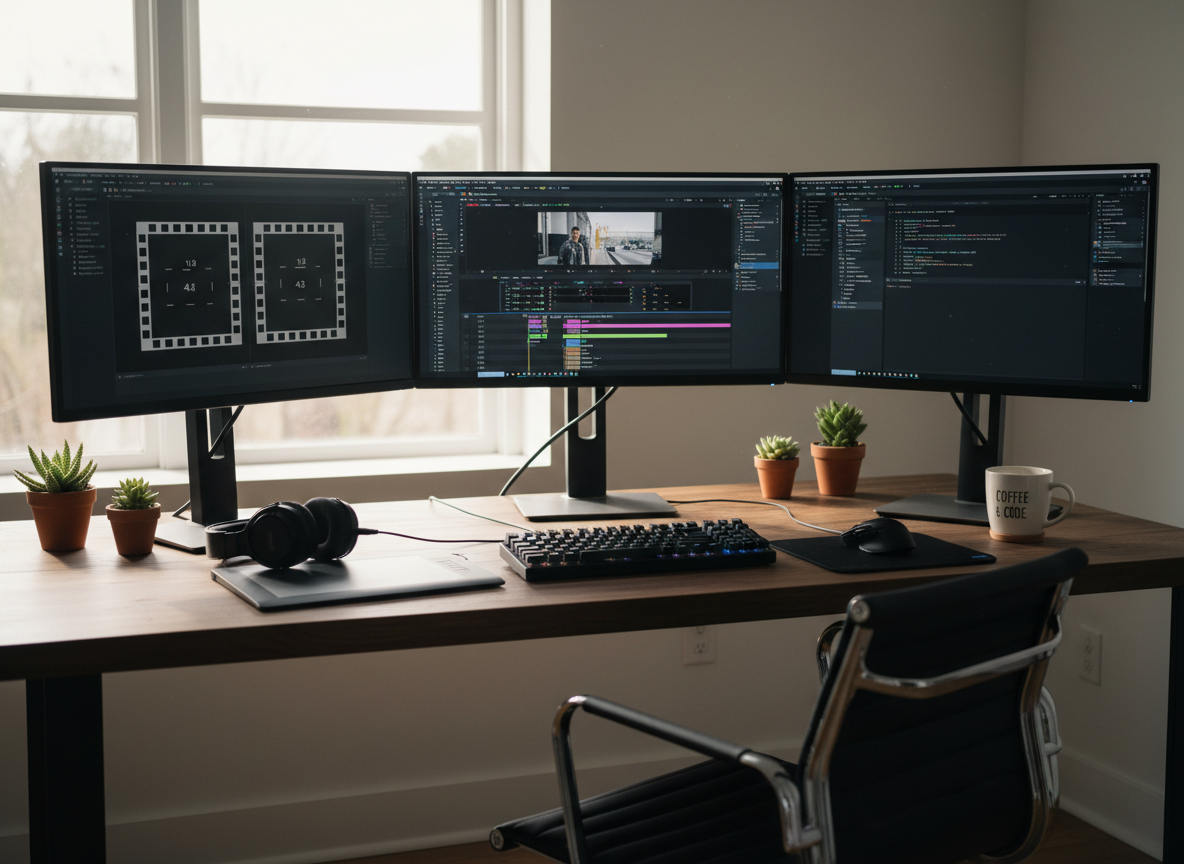
Photo by Quixess Social
Demofable represents this approach. It detects key elements within screen recordings, cursor movement, highlighted buttons, text input, and visual focus points, then automatically generates platform-ready versions in 16:9, 9:16, and 1:1 formats simultaneously. Rather than degrading a “master” version through manual cropping, the platform intelligently adapts composition for each format, preserving clarity and context.
One walkthrough, infinite output possibilities
The technological shift eliminates the false choice between re-recording and reformatting. A single screen recording produces polished, platform-optimized video in every required format without additional recording time or extensive post-production labor. The intelligence goes beyond mechanical resizing, the tool recognizes that vertical mobile ads need tighter framing than desktop demos, and square content requires different visual balance than widescreen formats. For a SaaS walkthrough, the system highlights specific features for mobile viewers while maintaining broader overviews for desktop audiences, all from one source recording.
Transforming Your Video Workflow
How multi-aspect-ratio video improves production speed
Traditional workflows waste enormous time on format conversion. A sales demo recorded in 16:9 requires hours resizing for LinkedIn (1:1), TikTok (9:16), and email (4:3). Intelligent format conversion transforms a single raw recording into multiple optimized formats automatically. Sales teams report 60-70% reductions in demo production time when shifting from manual editing to intelligent conversion. What previously required freelance editors happens in minutes, compounding across dozens of monthly videos.

Photo by Vito Goričan on Pexels
Real-world applications across teams
Sales teams send personalized demos without recording separate takes. A single 10-minute recording becomes a 60-second vertical demo for mobile prospects, detailed 16:9 for enterprise desktop review, and quick 1:1 clips for LinkedIn outreach.
Marketing teams generate social formats instantly. A product announcement becomes native content for Instagram Reels, YouTube Shorts, TikTok, LinkedIn, and email, each properly formatted and paced for platform algorithms.
Customer support scales by producing vertical help videos from the same workflow as desktop tutorials, offering both detailed desktop reference and quick mobile-optimized walkthroughs.
Product teams announce features once across all channels in optimized formats, with internal training, customer webinars, and public social media all from one recording. For detailed insights, explore our guide on converting screen recordings to step-by-step guides.
Building a Scalable Video Strategy for 2026
Why platform optimization matters to your bottom line
Video efficiency directly impacts measurable outcomes. Sales teams using properly formatted vertical demos see 35-40% faster response times, while mobile-optimized content loads instantly and holds attention. Demo-to-close rates improve when prospects review content on preferred devices. A four-person team spending 12 hours weekly on video editing represents $40,000+ annual labor cost. Intelligent format conversion reduces that to 2-3 hours weekly, freeing 400+ hours annually for strategy and content creation.

Photo by Quixess Social
The future of adaptive video content
Teams mastering adaptive workflows will outpace competitors still editing manually. A company publishing one demo weekly across six formats produces 312 video pieces annually, while competitors publishing only horizontal versions create 52. Content multiplication compounds audience reach and establishes presence across platforms where competitors are absent. AI video tools now enable teams to compete on content quality and volume rather than production budget.
Conclusion
Multi-aspect-ratio video is now the foundation of modern content production. Intelligent video saves teams hundreds of hours annually while multiplying audience reach across every platform. One recording that transforms into multiple shapes eliminates bottlenecks while enabling competition on quality and volume rather than budget. Start with one demo video and observe how much time your team reclaims.