
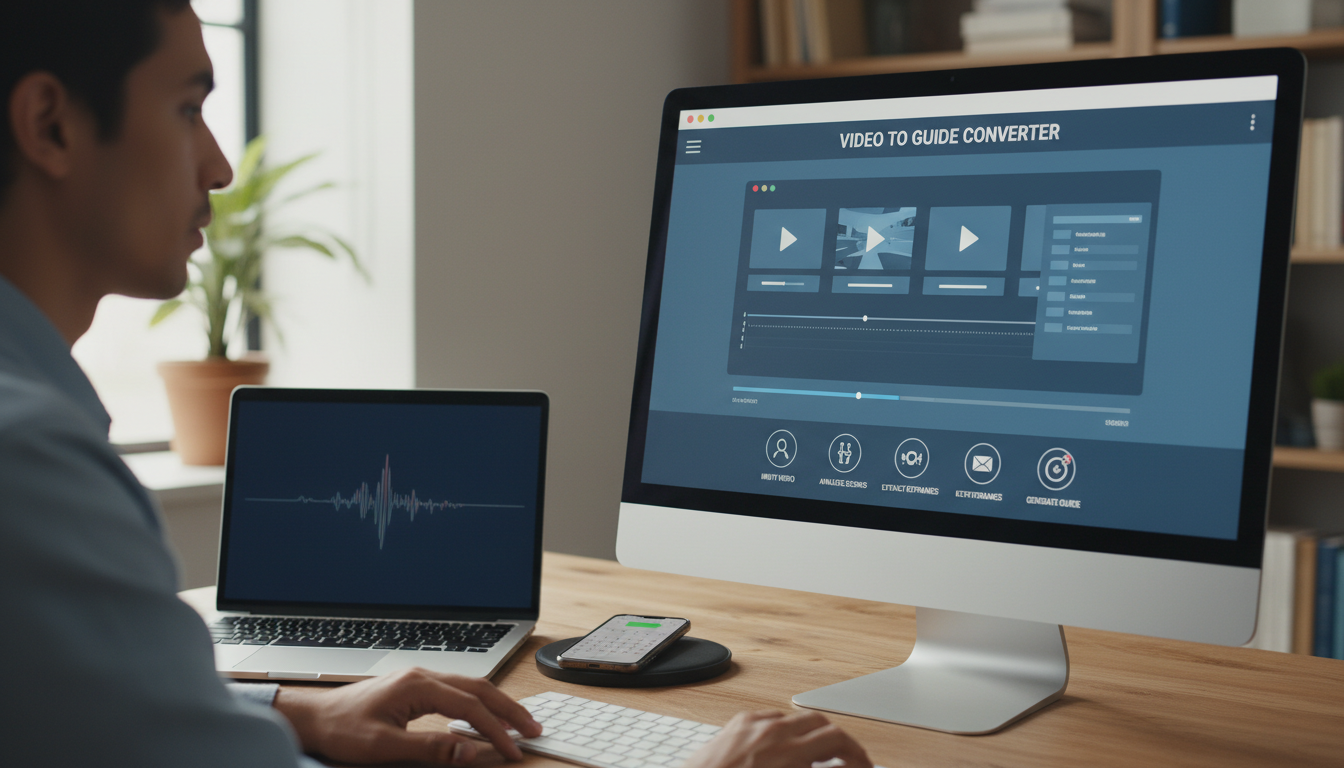
Converting Unscripted Screen Recordings to Step-by-Step Guides: An Engineer’s Workflow
Raw screen recordings capture authentic product workflows, but they rarely translate directly into polished documentation. Engineers stumble over explanations, sensitive data flashes across the screen, and technical writers spend days manually transcribing content into step-by-step guides. Modern AI-powered solutions now eliminate this bottleneck, automatically converting unscripted screen recordings into edited demo videos and professional written documentation, all from a single take.
Why Manual Documentation From Screen Recordings Costs Time and Money
The traditional workflow bottleneck
Product teams typically record multiple takes of the same workflow. Once recording wraps, editors trim dead air and remove false starts, while technical writers transcribe narration, break it into discrete steps, and create accompanying screenshots. According to 2025 industry data, teams spend an average of 4-6 hours editing a 5-minute demo video, plus 3-4 additional hours creating written documentation. For a team producing just 10 walkthroughs per quarter, that’s 70-100 hours of pure editing work. Compounding this, a single demo video requires adaptation for websites, YouTube, LinkedIn, and mobile platforms, necessitating multiple re-editing cycles.
Where editing and privacy concerns create delays
Privacy and security add another layer. Screen recordings frequently capture sensitive information: API keys, customer account numbers, and configuration details. Manual review and pixel-by-pixel blurring are tedious and error-prone, risking overlooked credentials that create legal and reputational damage. These friction points delay documentation behind product releases, leaving customer success teams scrambling for walkthroughs and support tickets spiking from lack of clear guidance.
How AI-Powered Video to Guide Conversion Works
Capturing both recording and interaction data
Modern solutions like Demofable use AI to transform how teams capture screen recordings. Rather than recording video alone, a browser extension simultaneously logs every click, scroll, input field interaction, and UI element accessed during the demonstration. This dual-capture approach creates structured data that the system understands not as pixels, but as discrete workflow steps tied to specific application actions. This metadata becomes the foundation for both automated video editing and written documentation generation.

Photo by Quixess Social
Automated transcription and editing decisions
The solution automatically transcribes narration using advanced speech recognition, then applies intelligent editing logic. AI identifies verbal filler words, awkward pauses, and self-corrections that interrupt clarity. It detects moments where zoom emphasis would improve comprehension and flags those automatically. Sensitive information detection runs in parallel, scanning for customer email addresses, account numbers, API keys, and internal domains for automatic blurring. Human reviewers then approve these flags before rendering, ensuring no confidential data reaches public documentation.
Human-in-the-loop approval process
Automation handles the heavy lifting, but human judgment remains essential. Reviewers receive a formatted report showing flagged privacy issues, suggested edits, and generated documentation. They approve privacy masks, confirm editing suggestions, and refine the written guide. This structured review takes minutes, not hours. Once approved, a single recording renders automatically into multiple formats, polished video, mobile-optimized versions, and a complete written guide, all synchronized and ready for deployment.
From Single Recording to Multiple Polished Outputs
Generating aspect-ratio-specific video versions
The platform automatically generates aspect-ratio-specific versions from a single recording, intelligently reframing content for widescreen (16:9), vertical (9:16), and square (1:1) formats simultaneously. Sales teams receive polished demos optimized for presentation screens, while marketing gains mobile-ready content for LinkedIn and TikTok without additional recording sessions.
Automated step-by-step guide generation
Demofable‘s AI converts screen recordings into detailed, step-by-step written guides automatically. Each frame becomes a numbered step with accompanying descriptions, eliminating parallel documentation workflows. A support team previously requiring hours of manual transcription now receives a fully formatted help-center article in minutes, complete with captured screenshots and contextual descriptions.
Real-World Impact for Product and Engineering Teams
Accelerating onboarding and customer education
With automated video-to-guide conversion, a feature walkthrough ships to customers within hours of recording, not days. Customer success teams build comprehensive onboarding libraries without hiring freelance producers or straining internal resources. Sales teams can record quick, tailored walkthroughs specific to industry use cases, generating multiple polished versions from one take so each prospect receives a personalized experience.

Photo by Quixess Social
Reducing production costs and tool overhead
Traditional workflows require multiple tools: screen recording software, video editing suites, transcription services, and design platforms, plus contracted freelancers. Consolidating these functions into a single workflow eliminates redundant tools and coordination friction. Teams no longer need voice actors, external agencies, or multiple editing platforms, freeing engineers and product managers to focus on building features.
Conclusion
Automated documentation from video transforms how engineering and product teams scale customer education and sales enablement. By converting authentic screen recordings into polished videos, written guides, and social-ready clips optimized for their intended audience, teams cut documentation time by up to 80% while maintaining quality and consistency. This enables faster feature announcements and equips sales teams to close deals with confidence.